
Case Studies
Integrating Blockchain Technology into Software Applications

Blockchain is no longer just the backbone of cryptocurrency; it’s a transformative technology reshaping how software applications handle trust, transparency, and security.
From securing patient records to streamlining financial transactions, blockchain offers a decentralized approach to data integrity and system resilience. For industries like healthcare, pharmacy, and FinTech, integrating blockchain into software applications isn’t just innovative; it’s strategic.
What Is Blockchain?
At its core, blockchain is a distributed ledger that records transactions across a network of computers. Each “block” contains data, a timestamp, and a cryptographic hash of the previous block, creating an immutable chain.
Key features:
- Decentralization: No single point of control or failure
- Transparency: Every transaction is visible and verifiable
- Security: Cryptographic validation prevents tampering
- Immutability: Once recorded, data cannot be altered retroactively
Why Integrate Blockchain into Software Applications?
✅ Enhanced Data Security
Blockchain’s cryptographic structure makes it nearly impossible to alter records without detection.
✅ Improved Transparency & Trust
Every transaction is traceable, which builds confidence among users, regulators, and partners.
✅ Decentralized Control
Reduces reliance on centralized servers, minimizing risks of outages or breaches.
✅ Smart Contracts
Automated, self-executing agreements coded directly into the blockchain streamline workflows and reduce human error.
Use Cases in Healthcare, Pharmacy & FinTech
Healthcare
- Patient Record Management: Secure, interoperable health records across providers
- Clinical Trials: Transparent tracking of trial data and consent
- Medical Supply Chain: Authenticity verification and traceability of equipment and medications
Pharmacy
- Prescription Tracking: Immutable logs of prescriptions to prevent fraud
- Inventory Management: Real-time tracking of drug movement and expiration
- Regulatory Compliance: Automated audit trails for HIPAA and FDA standards
FinTech
- Secure Transactions: Fast, verifiable peer-to-peer payments
- Fraud Prevention: Tamper-proof logs of financial activity
- Digital Identity Verification: Decentralized identity systems for onboarding and KYC
How to Integrate Blockchain into Your Application
- Choose the Right Blockchain Platform
- Public (e.g., Ethereum, Solana): Open, decentralized, ideal for transparency
- Private/Consortium (e.g., Hyperledger, Quorum): Controlled access, better for enterprise use
- Define the Use Case
- Is blockchain solving a real problem (e.g., trust, traceability)?
- Can it improve performance or compliance?
- Design Smart Contracts
- Write secure, efficient code to automate transactions and logic
- Test thoroughly to prevent vulnerabilities
- Integrate with Existing Systems
- Use APIs and middleware to connect blockchain with legacy databases or cloud platforms
- Ensure seamless user experience and data flow
- Ensure Compliance & Security
- Align with industry regulations (HIPAA, GDPR, PCI-DSS)
- Implement encryption, identity management, and access controls
Challenges to Consider
- Scalability: Some blockchains struggle with high transaction volumes
- Complexity: Requires specialized development skills and infrastructure
- Regulatory Uncertainty: Laws around blockchain are still evolving
- User Education: Adoption depends on clear communication and intuitive design
Conclusion: Blockchain as a Strategic Advantage
Blockchain isn’t a silver bullet, but when applied thoughtfully, it can elevate software applications to new levels of trust, transparency, and resilience.
At Rite Technologies, we help healthcare, pharmacy, and FinTech organizations integrate blockchain in ways that are secure, scalable, and human-centered. Whether it’s safeguarding patient data or streamlining financial workflows, we design solutions that reflect both innovation and integrity.
Ready to explore blockchain for your next application?
- Let Rite Technologies assess your use case and recommend the right blockchain architecture
- Connect with our experts to design smart contracts and secure integrations
- Partner with us to build software that’s not just functional, but future-proof
Because when trust is built into the code, everything else becomes possible.
MORE CASE STUDIES

Tech-Driven Disruption: What Businesses Should Expect
Technology is no longer just supporting business; it’s actively disrupting and redefining it. From AI-led automation to platform-based ecosystems, disruption is accelerating across industries like retail, healthcare, telecom, and financial services. For businesses,...
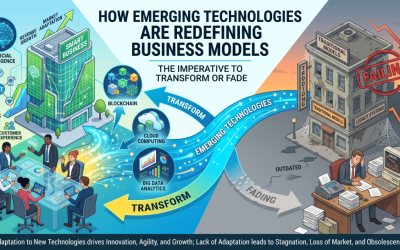
How Emerging Technologies Are Redefining Business Models: The Imperative to Transform or Fade
The Disruption Is Real—And It's Not About Technology Consider this: A decade ago, Blockbuster dominated the video rental industry with thousands of physical locations. Netflix was a curiosity. Today, the entire rental industry has vanished, and Netflix commands...
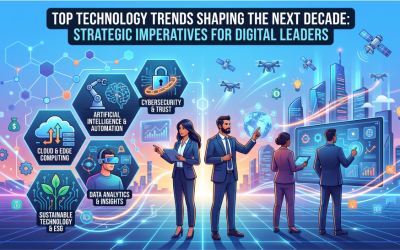
Top Technology Trends Shaping the Next Decade: Strategic Imperatives for Digital Leaders
InsightsThe Era of Accelerated Innovation We stand at an inflexion point. The pace of technological change is no longer linear; it's exponential. Organisations that once dominated their markets through operational excellence alone are now competing against...

Exploring Microservices Architecture: Breaking Down Monolithic Applications
Case StudiesIn the age of agility, scalability, and continuous delivery, traditional monolithic applications often feel like digital dinosaurs, heavy, rigid, and hard to evolve. That’s why organizations across industries are embracing microservices architecture: a...

The Role of Artificial Intelligence in Automating Software Testing
Case StudiesIn the race to deliver faster, smarter, and more reliable software, testing often becomes the bottleneck. Manual testing is time-consuming, error-prone, and difficult to scale. Enter Artificial Intelligence (AI), a transformative force that’s reshaping how...

Harnessing the Power of Big Data in Software Solutions
Case StudiesIn today’s digital ecosystem, data isn’t just a byproduct; it’s a strategic asset. From predicting patient outcomes to detecting financial fraud, Big Data is transforming how software solutions deliver insight, efficiency, and impact. But harnessing Big...