
Case Studies
Mould Rack Automation
Problem Statement:
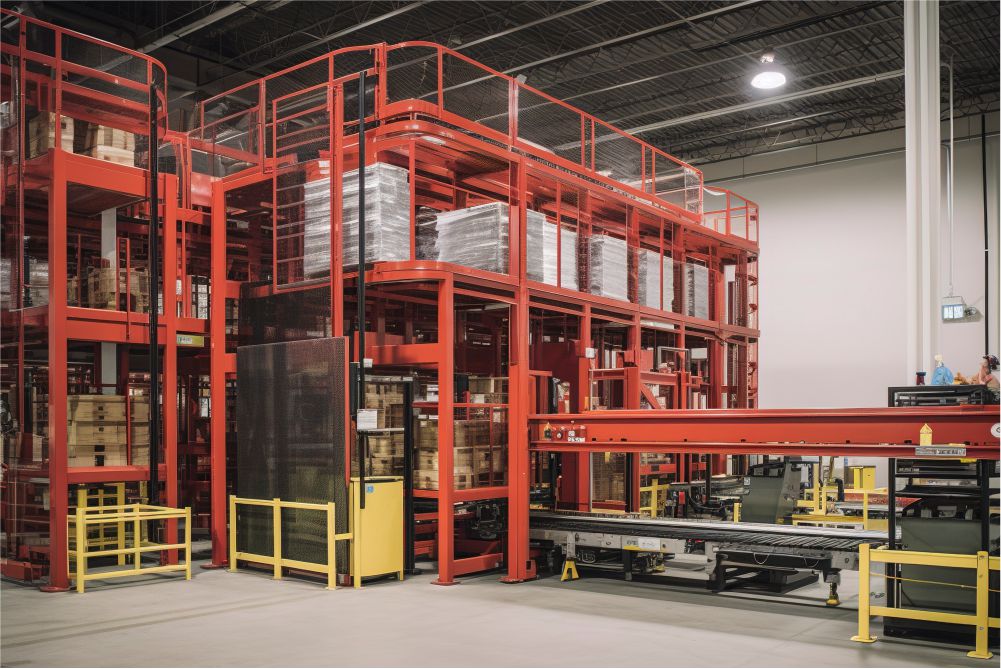
The client, a manufacturer specializing in mould machines and engineering machines specializing in the plastic industry, deals with many customers requiring their machines to build various products. However, building a new product requires new mould created and at times there are thousands of mould lying on the floor, and locating and managing them becomes a great headache and costly affair. The need was the protection of moulds and space-saving for clients, who faced significant challenges in optimizing their manufacturing processes. Specifically, the manual control and management of mould racks posed efficiency issues, requiring a more streamlined and automated solution. The client sought a system that would automate the maneuvering of cranes for loading and unloading tasks, integrating seamlessly with existing hardware, particularly PLC (Modbus mode), to enhance operational efficiency.
Solution:
Rite Technologies proposed a comprehensive solution involving the development of a Windows Application with the capability to automate Mould Racks. The core functionality included a user-friendly interface built on Windows Forms and powered by the .Net framework. This application was designed to interact with Programmable Logic Controllers (PLC) using Modbus mode for efficient hardware integration. The manual logic in the PLC Ladder was translated into a software-based system, providing a simplified and centralized control mechanism.
The technology stack employed for this solution comprised Windows Forms for the graphical user interface, .Net for robust application development, SQL for database management, Dapper for data access, and PLC APIs to interface with Programmable Logic Controllers. Additionally, the RS-485 communication protocol was leveraged for seamless communication between the software and hardware components. The incorporation of QR Code technology facilitated quick and accurate identification of equipment, enhancing the overall efficiency of the manufacturing process.
Benefits:
The implementation of this automated Mould Racks system brought forth several notable benefits. Firstly, the streamlined control of cranes through simple button clicks significantly reduced manual intervention, leading to improved operational efficiency. The conversion of PLC logic to a Windows Application not only enhanced user accessibility but also provided a more intuitive and user-friendly experience. The integration of QR Code technology contributed to the accuracy of equipment identification, minimizing errors in loading and unloading tasks. Overall, the solution resulted in increased productivity, reduced downtime, and enhanced resource utilization.
In conclusion, the successful integration of these technologies resulted in a sophisticated yet user-friendly solution that addressed the client’s challenges in manufacturing mould protection and space-saving equipment. The automated Mould Racks system not only optimized operational processes but also laid the foundation for future scalability and technological advancements in the client’s manufacturing environment.
MORE CASE STUDIES

POS for Retail Pharmacy
Case StudiesProblem Statement: Rite Technologies helped its client (PMS) realize a need for a comprehensive and efficient point-of-sale (POS) system that seamlessly integrates with its Pharmacy Management system (PMS). The goal was to ensure rapid, accurate, and...

Centralized control for multiple pharmacies
Case StudiesProblem Statement: Managing multiple pharmacy locations efficiently poses a significant challenge for multi-store managers. Coordinating core functions such as data and report management, prior authorizations, inventory reports, intra-store transfers, and...

Revolutionizing Plastic Industry Operations: A Seamless Integration with Cloud-Based Management System
Case StudiesProblem Statement: The pioneers in the plastic industry faced significant inefficiencies in their operations due to a reliance on Excel sheets for managing processes between the Factory, Head Office (HO), Vendors, and Customers. This manual system resulted...

Remote Monitoring of Chronic Disease Patients (Protected Health Information) (PHI – Health IOT)
Case StudiesA healthcare organization in a rural area has a high population of patients with chronic diseases, such as diabetes and hypertension. The organization faces challenges in providing timely care to these patients due to their remote locations and limited...

PHI data at Retail Pharmacies
Case StudiesAs a part of NCPDP programmes going across there is a need to capture clinical data for measuring outcomes to ensure patient progress being reported back enabling proof for correct MTM and outcomes getting reported back. As a mandate enrolled by...

Clinical Trials Enrollment
Case StudiesBusiness Problem: - Client wanted to launch a differentiator model of connecting hospitals, doctors and administrators to facilitate online clinical trials enrollment and marketing. For that they wanted a system very dynamic to generate and render...